
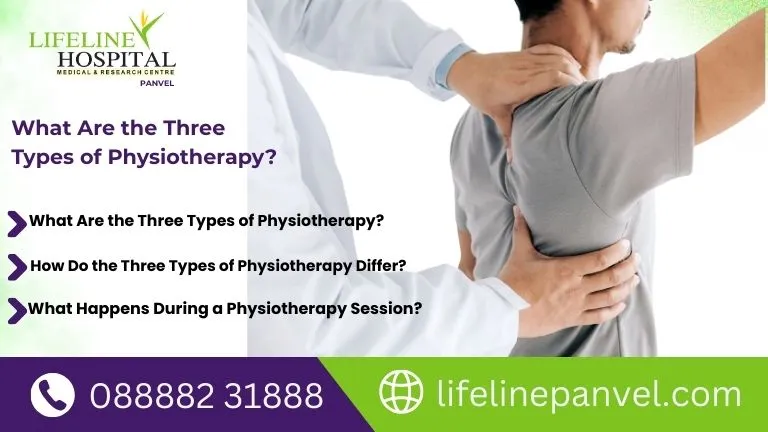
What Are the Three Types of Physiotherapy?
Blog What Are the Three Types of Physiotherapy? Meaning, Uses, and Benefits Physiotherapy helps people move better, feel less pain, and recover after injury, illness, or surgery. Many people know that physiotherapy is useful, but they often wonder how it actually works and what kinds of physiotherapy treatments are available. A common question is, what are the three types of physiotherapy? Understanding these types helps people know which kind of treatment may be best for their condition. Each type of physiotherapy focuses on different problems and recovery needs. Understanding Physiotherapy Physiotherapy is a form of treatment that improves movement, strength, and physical function. What Is Physiotherapy in Simple Words? Physiotherapy uses exercises, physical techniques, and guided movements to help the body heal naturally. It is often recommended for pain relief, injury recovery, and improving mobility without depending only on medicines. What Are the Three Types of Physiotherapy? Physiotherapy is generally grouped into three main types based on the condition being treated. 1. Orthopedic Physiotherapy Orthopedic physiotherapy focuses on problems related to bones, joints, muscles, and ligaments. It is commonly used for back pain, neck pain, knee pain, shoulder pain, arthritis, fractures, and recovery after joint surgeries like knee or hip replacement. This type of physiotherapy helps reduce pain, improve joint movement, strengthen muscles, and support faster recovery. 2. Neurological Physiotherapy Neurological physiotherapy is used for conditions that affect the brain, spinal cord, and nerves. It is commonly recommended for people who have had a stroke, spinal cord injury, Parkinson’s disease, multiple sclerosis, or nerve damage. The main goal of neurological physiotherapy is to improve balance, coordination, muscle control, and independence in daily activities. 3. Cardiopulmonary Physiotherapy Cardiopulmonary physiotherapy focuses on heart and lung health. It is helpful for people with breathing problems, heart conditions, or those recovering after heart or chest surgery. This type of physiotherapy improves breathing capacity, stamina, and overall physical endurance, helping patients return to normal activities safely. How Do the Three Types of Physiotherapy Differ? Each type of physiotherapy serves a specific purpose. 1. Focus Areas of Different Physiotherapy Types Orthopedic physiotherapy targets muscles and joints, neurological physiotherapy focuses on nerve-related movement problems, and cardiopulmonary physiotherapy supports heart and lung function. A physiotherapist decides the right type based on the patient’s condition. Conditions That Benefit From Physiotherapy Physiotherapy is helpful for many health issues. 1. Common Conditions Treated With Physiotherapy These include sports injuries, arthritis, back pain, post-surgical recovery, stroke rehabilitation, nerve injuries, breathing disorders, and general weakness due to long-term illness. What Happens During a Physiotherapy Session? Each physiotherapy session is planned carefully. 1. Assessment and Treatment Planning The physiotherapist checks pain levels, movement, strength, posture, and daily activity limitations before creating a personalized treatment plan. 2. Exercises and Physical Techniques Treatment may include stretching, strengthening exercises, balance training, posture correction, and pain-relief techniques. Benefits of Physiotherapy Physiotherapy offers long-term physical benefits. 1. Pain Relief and Better Movement Physiotherapy helps reduce pain naturally and improves flexibility, strength, and coordination. 2. Faster and Safer Recovery With guided therapy, the body heals properly, reducing the risk of re-injury and long-term problems. How Long Does Physiotherapy Take to Show Results? Recovery time varies for each person. 1. Factors That Affect Recovery Duration The type of condition, severity, age, overall health, and consistency with exercises all influence how quickly improvement is seen. Role of Home Exercises in Physiotherapy Physiotherapy does not stop at the clinic. Importance of Following Home Exercise Programs Doing prescribed exercises at home helps maintain progress, improve strength, and speed up recovery. When Should You Consider Physiotherapy? Early treatment leads to better results. Signs You May Need Physiotherapy Ongoing pain, stiffness, reduced movement, weakness, poor balance, or slow recovery after injury or surgery are signs that physiotherapy may help. Conclusion – Understanding the Three Types of Physiotherapy Knowing what are the three types of physiotherapy helps people make informed decisions about their treatment. Orthopedic, neurological, and cardiopulmonary physiotherapy each play a unique role in recovery. With the right type of therapy, proper guidance, and consistency, physiotherapy can greatly improve movement, reduce pain, and help people return to active, independent lives. Don’t let pain hold you back! Book your physiotherapy session now and experience the power of recovery in action. Make Appointment Frequently Asked Questions (FAQs) Which type of physiotherapy is best for muscle and joint pain? Orthopedic physiotherapy is usually the best choice for muscle and joint pain. It focuses on bones, muscles, ligaments, and joints and is commonly used for back pain, knee pain, shoulder pain, and arthritis. Can physiotherapy help even if surgery is not needed? Yes, physiotherapy is often recommended even without surgery. It can reduce pain, improve movement, and strengthen muscles, sometimes helping patients avoid surgery altogether. How does a physiotherapist decide which type of physiotherapy is needed? A physiotherapist decides based on your condition, pain level, movement problems, medical history, and daily activity needs. A physical assessment helps choose the most suitable type of physiotherapy. Is physiotherapy safe for elderly patients? Yes, physiotherapy is safe for elderly patients when done under professional guidance. Exercises are customized to improve balance, strength, and mobility while reducing the risk of falls and injuries. Do all three types of physiotherapy involve exercises? Yes, exercises are part of all three types of physiotherapy. However, the type of exercises differs depending on whether the focus is joints, nerves, or heart and lung function. Orthopedic physiotherapy is usually the best choice for muscle and joint pain. It focuses on bones, muscles, ligaments, and joints and is commonly used for back pain, knee pain, shoulder pain, and arthritis. Yes, physiotherapy is often recommended even without surgery. It can reduce pain, improve movement, and strengthen muscles, sometimes helping patients avoid surgery altogether. A physiotherapist decides based on your condition, pain level, movement problems, medical history, and daily activity needs. A physical assessment helps choose the most suitable type of physiotherapy. Yes, physiotherapy is safe for elderly patients when done under professional guidance. Exercises are customized to improve balance, strength,