
OCD Specialists
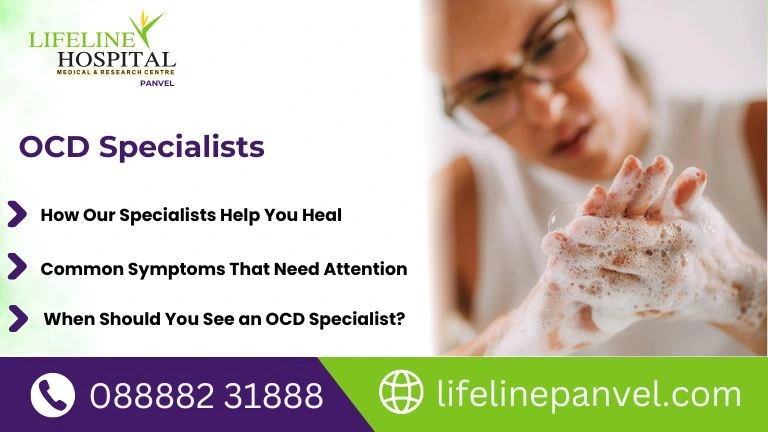
Blog Finding Your Way Back: Expert Support for OCD Living with constant intrusive thoughts or the weight of repetitive rituals can feel like an uphill battle that nobody else sees. If you feel exhausted by the mental “loops” of obsessive-compulsive disorder (OCD), please know that you aren’t alone—and you don’t have to manage this on your own. At Lifeline Hospital, we look past the diagnosis to see the person behind it. We know that OCD can quietly reshape your routines and relationships, but with the right specialists and a tailored plan, you can regain your sense of self and find a path toward lasting relief. Understanding OCD: More Than Just “Being Neat” Obsessive-compulsive disorder is a persistent mental health condition characterized by two main parts: obsessions (unwanted, distressing thoughts) and compulsions (the actions you feel driven to take to quiet the anxiety those thoughts cause). It’s a cycle that can make the simplest daily tasks feel like a marathon. However, it’s important to remember that OCD is a medical condition, not a personality flaw. With the right therapeutic approach, the intensity of these symptoms can be dialed down significantly. Who Are Obsessive Compulsive Disorder Specialists? Think of an OCD specialist as a guide who understands the specific “map” of your anxiety. Our team consists of psychiatrists, psychologists, and therapists who have dedicated their careers to understanding anxiety-related conditions. They don’t just offer generic advice; they take the time to listen to your specific experience. By understanding how OCD affects your world, they can build a treatment strategy, whether through therapy, medication, or both that actually fits your life. How Our Specialists Help You Heal Recovery isn’t a “one-size-fits-all” process. We use proven, science-backed methods to help you break the cycle of anxiety. A Warm, Detailed Assessment We start with a conversation. By evaluating your patterns and the severity of your symptoms, we can create a roadmap that feels manageable and effective for you. Cognitive Behavioral Therapy (CBT) CBT is all about changing the “script.” We help you identify those negative thought patterns and give you the tools to respond to them differently, gradually weakening their hold over you. Exposure and Response Prevention (ERP) ERP is often considered the gold standard for OCD. In a safe, controlled environment, we help you face the things that trigger your anxiety without falling back on compulsions. It takes practice, but over time, the fear begins to fade. Medication Support Sometimes, the brain’s chemistry needs a little help to find its balance. If appropriate, our psychiatrists can recommend medication to “lower the volume” of the anxiety, making therapy much more effective. Ongoing Care and Follow-Up We’re with you for the long haul. Regular check-ins allow us to celebrate your progress and tweak your treatment plan as you grow stronger and more confident. Common Symptoms That Need Attention OCD looks different for everyone. For some, it’s a constant need to check the locks or clean; for others, it’s an internal struggle with “what if” thoughts or a need for perfect symmetry. If these rituals are taking up hours of your day, causing you significant distress, or straining your relationships at home or work, it may be a sign that professional help is needed. When Should You See an OCD Specialist? If obsessive thoughts or repetitive behaviors become frequent or difficult to control, it’s important to seek medical advice. Reaching out at the right time can help you understand what’s happening and begin a treatment plan that supports recovery and long-term well-being. Why Choose Lifeline Hospital? We believe mental health care should be as compassionate as it is clinical. At Lifeline Hospital, we combine medical expertise with a genuine, human touch. Our goal isn’t just to “treat a condition”; it’s to help you feel empowered, supported, and ready to enjoy your life again. Conclusion Obsessive-compulsive disorder can feel challenging, but it is manageable with the right support and care. Recognizing the signs early and seeking help from experienced specialists can make a significant difference in recovery. At Lifeline Hospital, we are here to help you move toward a more balanced life. You deserve peace of mind—reach out for expert OCD support today. Make Appointment FAQs What does an OCD specialist do? The specialist will ask about your history and symptoms to determine the best combination of therapy or medication for your specific needs. Is OCD treatable? Absolutely. While OCD is often a long-term journey, many people find that with consistent treatment, their symptoms become a small background noise rather than a disruptive force. Which therapy works best for OCD? Most experts agree that Cognitive Behavioral Therapy (CBT), particularly when paired with Exposure and Response Prevention (ERP), provides the best results. When should I seek professional help? The best time is as soon as you notice your thoughts or behaviors are making your life harder than it needs to be. You don’t have to wait for a “crisis.” Can OCD go away without treatment? Usually, OCD requires professional support. Without treatment, symptoms may continue or become more severe. The specialist will ask about your history and symptoms to determine the best combination of therapy or medication for your specific needs. Absolutely. While OCD is often a long-term journey, many people find that with consistent treatment, their symptoms become a small background noise rather than a disruptive force. Most experts agree that Cognitive Behavioral Therapy (CBT), particularly when paired with Exposure and Response Prevention (ERP), provides the best results. The best time is as soon as you notice your thoughts or behaviors are making your life harder than it needs to be. You don’t have to wait for a “crisis.” Usually, OCD requires professional support. Without treatment, symptoms may continue or become more severe.