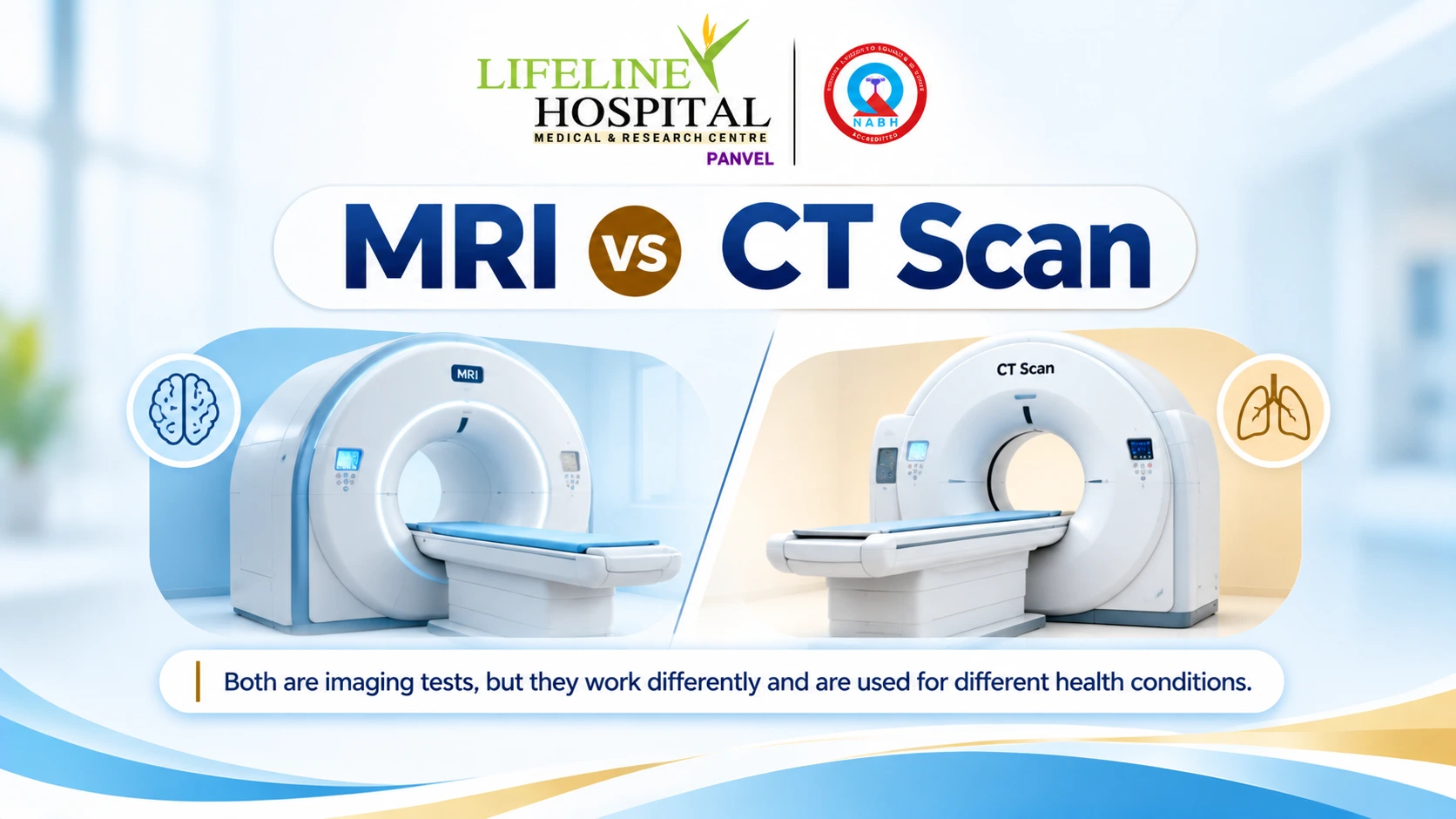
MRI and CT scans are imaging tests used to help doctors examine internal organs, tissues, bones and other body structures. Although both produce detailed images of the body, they use different technologies and may be recommended for different medical conditions. MRI uses a strong magnetic field and radio waves, whereas CT uses X-rays to create cross-sectional images. The choice between MRI and CT depends on the clinical concern, the body part being examined, the urgency of the situation and individual safety considerations.
|
Features
|
MRI Scan
|
CT Scan
|
|---|---|---|
|
Full Form
|
Magnetic Resonance Imaging
|
Computed Tomography
|
|
Imaging Technology
|
Uses a strong magnetic field and radio waves
|
Uses X-rays and computer processing
|
|
Main Purpose
|
Provides detailed images of soft tissues, organs and certain joints
|
Provides detailed cross-sectional images of bones, organs, lungs and other structures
|
|
Common Uses
|
Brain and spinal cord conditions, ligament injuries, joint problems and selected soft-tissue abnormalities
|
Bone fractures, chest conditions, internal injuries, bleeding and evaluation of certain abdominal conditions
|
|
Image Detail
|
Particularly useful for distinguishing many soft tissues
|
Particularly useful for assessing bones, lungs and many acute internal conditions
|
|
Radiation Exposure
|
Does not use ionising radiation
|
Uses ionising radiation
|
|
Scan Duration
|
Often takes around 20–60 minutes, depending on the scan
|
Often takes a few minutes; the complete appointment may take longer
|
|
Preparation
|
May require removal of metal objects, MRI safety screening and specific preparation depending on the scan
|
May require fasting or other preparation if contrast material is planned
|
|
Contrast Material
|
Gadolinium-based contrast may be used when clinically indicated
|
Iodine-based contrast may be used when clinically indicated
|
|
Patient Position
|
Usually involves lying on a movable table inside the MRI scanner
|
Usually involves lying on a movable table that passes through the CT scanner
|
|
Noise During Scan
|
The scanner can produce loud knocking or tapping sounds
|
The scanner generally produces less noise
|
|
Claustrophobia
|
The enclosed scanner may cause discomfort for some patients
|
The scanning area is generally shorter, which may feel more comfortable for some patients
|
|
Metal Implants
|
Certain implants or devices may be unsafe or require specific MRI safety checks
|
Many implants can be assessed with CT, although individual safety considerations still apply
|
|
Emergency Assessment
|
May be used in selected urgent conditions, depending on the clinical situation and availability
|
Often preferred for rapid assessment of certain emergencies, including suspected internal bleeding or traumatic injuries
|
|
Pregnancy Considerations
|
MRI may be performed when clinically justified; gadolinium contrast is generally avoided unless essential
|
CT may be performed when medically necessary, with pregnancy related risks considered before imaging
|
|
Which Is More Suitable?
|
May be preferred when detailed soft-tissue information is needed
|
May be preferred when rapid imaging or detailed assessment of bones, lungs or certain acute conditions is required
|
Get a Call Back 30 minutes
Get Call Back In 30 Min